Does Pupil Size Matter Before Laser Eye Surgery?
Before laser eye surgery, we measure much more than a glasses prescription.
Corneal shape and thickness, tear film, eye health and the stability of the prescription all matter. Another measurement that may form part of the assessment is pupil size, particularly under reduced lighting.
Patients sometimes encounter information online suggesting that having large pupils automatically makes laser eye surgery unsuitable.
The relationship is more complicated than that.
Pupil size can be relevant, particularly when considering night vision, but it needs to be interpreted alongside the patient’s prescription, corneal measurements and the treatment being planned.
Why does the pupil change size?
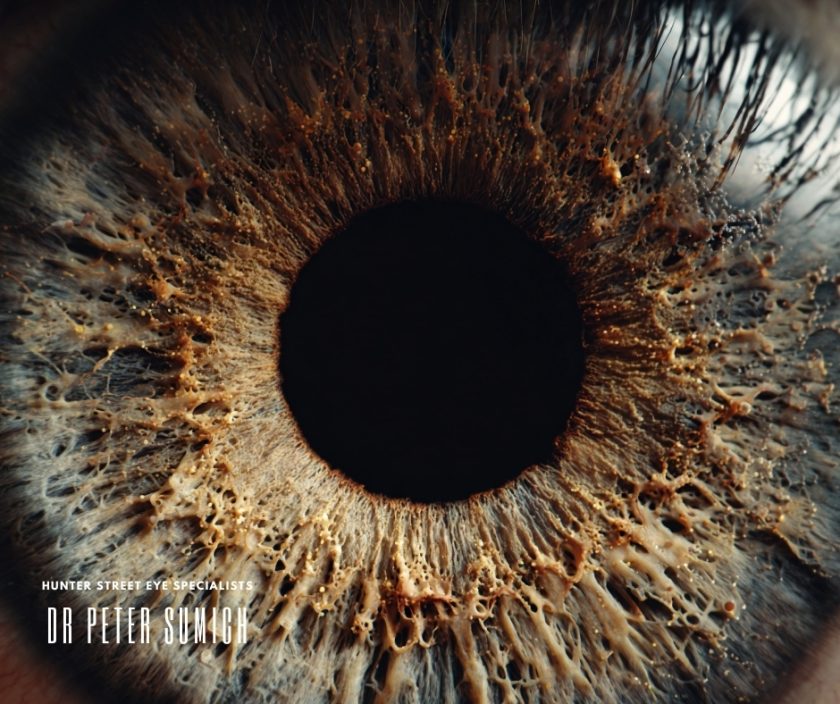
The pupil is the opening in the centre of the iris that controls how much light enters the eye.
In bright conditions, it becomes smaller. In darker conditions, it enlarges to allow more light into the eye.
This means a pupil measured in a brightly illuminated examination room may be considerably smaller than the same pupil when driving at night.
That is why pupil measurements can be taken under controlled low-light conditions when planning refractive surgery.
Why can pupil size matter after laser treatment?
Laser vision correction procedures such as LASIK and PRK alter the shape of the cornea to change how light is focused.
The laser treatment is planned over a defined area of the cornea.
When the pupil becomes larger in dim conditions, light enters through a wider area of the optical system. The relationship between this pupil diameter and the treated corneal area is one of several factors that can influence visual quality in low light.
Potential symptoms after refractive surgery can include halos, glare, starbursts or reduced quality of night vision.
Pupil size can contribute to this discussion, but it is not the only factor.
A large pupil does not automatically mean you cannot have laser eye surgery
This is an important distinction.
Pupil diameter should not generally be interpreted as a stand-alone pass-or-fail measurement.
A patient with relatively large pupils may still be suitable for treatment. Conversely, having small pupils does not guarantee that someone will avoid halos or other night-vision symptoms.
The assessment needs to consider the complete optical system.
Prescription matters too
The amount of refractive correction required affects the corneal treatment.
A small myopic correction and a high myopic correction do not require identical treatment profiles.
The same applies to astigmatism and other refractive errors.
This is one reason two patients with similar pupil diameters may not have identical treatment considerations.
Rather than asking only “How large are the pupils?”, we need to understand how pupil size relates to the prescription and the proposed treatment.
The optical zone is part of the planning
Patients may hear the term optical zone when researching laser vision correction.
Broadly, this refers to the central area over which the refractive treatment is designed to provide its principal optical correction. Treatment profiles can also incorporate surrounding transition or blend zones.
Increasing the treatment diameter is not simply a matter of making the laser treatment as large as possible.
A larger treatment area generally requires more corneal tissue to achieve a given refractive correction. Corneal thickness, shape, prescription and the amount of tissue that would remain after treatment therefore also need to be considered.
Treatment planning involves balancing these measurements rather than maximising one number in isolation.
Modern treatment planning considers more than pupil diameter
Laser technology and treatment planning have evolved considerably.
Depending on the platform and procedure, treatment planning may incorporate detailed corneal measurements, centration strategies, eye tracking and customised or optimised ablation profiles.
This does not mean optical symptoms can be eliminated or predicted perfectly.
It does mean that pupil diameter is best understood as one measurement within a much larger refractive assessment, rather than a single number that determines the outcome.
What about SMILE?
SMILE differs technically from LASIK and PRK.
Instead of reshaping the corneal surface using an excimer laser ablation, SMILE uses a femtosecond laser to create a small piece of corneal tissue, called a lenticule, within the cornea. The lenticule is then removed through a small incision to alter the cornea’s refractive power.
The optical considerations are therefore not identical between procedures.
Pupil size, prescription, corneal anatomy and the characteristics of the treatment still need to be considered when assessing suitability and discussing expected visual quality.
This is also why the choice between LASIK, SMILE and PRK should not be made from one measurement alone.
Night vision before surgery matters
An often overlooked part of the assessment is asking how the patient sees at night before treatment.
Some people already experience halos, glare or starbursts around headlights despite never having undergone eye surgery.
Dry eye, astigmatism, higher-order optical aberrations, early lens changes and other factors can all influence night vision.
Knowing what is already present provides useful context when discussing what a patient might experience after treatment.
Can we predict exactly who will experience halos?
No.
Measurements can help identify relevant risk factors and guide treatment planning, but they cannot predict an individual’s subjective visual experience with complete certainty.
Some patients notice optical effects early after surgery that diminish with healing and adaptation. Others may continue to notice them, particularly in specific lighting conditions.
This is why the pre-operative discussion should include not only whether the eye can technically be treated, but also the patient’s visual requirements.
Someone who does extensive night driving may place different importance on low-light visual quality from someone whose daily visual demands are quite different.
Pupil size is one piece of the assessment
It is tempting to reduce refractive surgery suitability to individual numbers:
Is my cornea thick enough?
Are my pupils too large?
Is my prescription within range?
Each measurement provides useful information, but none tells the whole story.
A laser vision correction assessment brings those measurements together: prescription, corneal shape and thickness, tear film, pupil behaviour, eye health and the patient’s visual requirements.
The important question is not whether a particular measurement is “good” or “bad”.
It is what that measurement means when considered with everything else we know about the eye.
Frequently Asked Questions
What is considered a large pupil?
Pupil diameter varies considerably between people and changes according to lighting, age and other factors. Rather than relying on a single universal cut-off, pupil measurements need to be interpreted in the context of the individual eye and proposed treatment.
Why are pupils measured in the dark before laser eye surgery?
Pupils enlarge in reduced light. Measuring them under controlled low-light conditions provides information about how widely the pupil may open when more of the optical system is being used, such as during night driving.
Do large pupils cause halos after LASIK?
Pupil size may contribute to night-vision symptoms, but it is not the sole determinant. Prescription, treatment profile, optical zone, corneal characteristics and pre-existing optical aberrations can also be relevant.
Can LASIK cause problems with night driving?
Halos, glare, starbursts and changes in low-light visual quality can occur following laser vision correction. Their severity and duration vary between individuals. Night-driving requirements should be discussed during the assessment, particularly when they are important for work or lifestyle.
Does having small pupils mean I will not experience halos?
No. Smaller pupils do not guarantee freedom from halos or glare. These symptoms can have several causes and cannot be predicted from pupil diameter alone.
Is pupil size more important for LASIK than SMILE or PRK?
The procedures use different treatment methods and optical profiles, so the relationship is not identical. Pupil size should be considered together with the procedure, prescription, corneal measurements and other aspects of the refractive assessment.
About the Specialist
Dr Peter Sumich is an ophthalmologist with a clinical focus on cataract surgery, laser vision correction and refractive lens exchange. His approach to refractive treatment planning considers detailed ocular measurements alongside eye health, prescription and the individual patient’s visual requirements.
Related Articles
LASIK, SMILE or PRK: Why the Right Procedure Depends on Your Eyes
How differences in the eye and prescription influence which laser procedure may be appropriate.
Why Does the Tear Film Matter Before Laser Eye Surgery?
Why a stable ocular surface matters for both measurements and visual quality.
Laser Eye Surgery in Your 40s: Why Reading Vision Changes the Discussion
How presbyopia changes the conversation about laser vision correction.
If you are considering laser vision correction, a comprehensive refractive assessment can help determine whether treatment may be appropriate and how your individual measurements influence the available options.
Disclaimer
This article provides general educational information only and does not constitute individual medical advice, diagnosis or treatment. Suitability for laser vision correction, treatment choice, potential benefits, limitations, alternatives and risks depend on individual circumstances and require appropriate clinical assessment.